

In-House Seminars
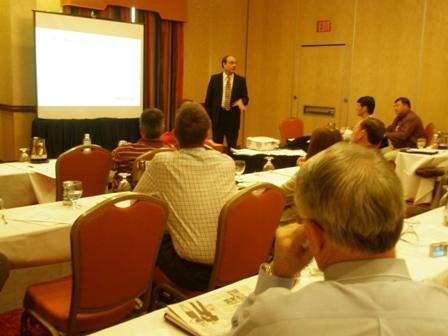
Technology forecasting and planning have become increasingly important activities for organizations striving to survive and prosper in an increasingly difficult business environment. Technology Futures' in-house seminars are an excellent way to focus and create strategic plans. Since 1978, TFI has provided quality in-house technology-related forecasting workshops and seminars to commercial organizations and government agencies throughout the world. Taught by teams of experts, these courses offer a number of very significant training advantages.
Why TFI In-House Courses Work for You:
- Creates a “team vision,” with participants gaining a common understanding of forecasting and planning methods.
- Focuses on subjects of specific interest to you and your organization.
- Combines learning sessions with internal planning and strategy sessions.
- Provides technology management tools for your day-to-day decision-making.
- Allows choice of seminar dates, length, content, and the number and level of participants.
- No travel costs or travel time for you and your colleagues.
- Very economical on a per-participant basis.
- Minimizes problems of confidentiality.
- Can serve as a starting point for actual in-house projects.
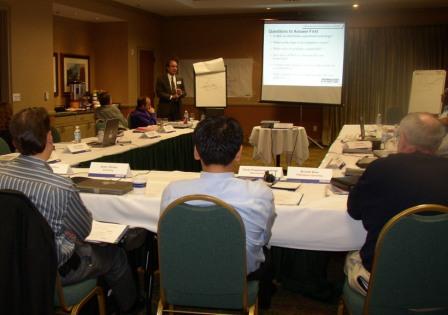
TFI In-House Seminars
TFI offers the following in-house seminars, or we can tailor sessions to one-day or to your specific needs. Contact us to discuss agendas and
Forecasting & Planning Technology™
Three-day workshop that teaches participants to conduct valid technology/market forecasts and how to utilize these forecasts to improve organizational planning.Managing & Implementing Technology™
Two-day workshop teaching modern management and implementation techniques that can be used to gain full value from your organization's special technology assets.Telecom Trends™
Two-day review of recent communications related forecasts conducted by TFI and other reputable forecasting groups.Minitrends: Seizing the Future Before It's Defined
One- to three-day seminar providing approaches to take advantage of emerging trends that are not recognized or appreciated by the general public and most businesses. Based on TFI's recent book MINITRENDS: How Entrepreneurs & Innovators Discover & Profit From Business & Technology Trends, attendees learn how Minitrends can be identified, evaluated, and translated into successful business enterprises.Quantitative Technology/Market Forecasting™
Two-day workshop teaching techniques for making quantitative technology/marketing forecasts using computer programs.Forecasting, Planning & Managing Technology™
Three- to five-day seminar designed to teach participants how to conduct and assess technology/market forecasts and integrate them into organizational planning and management.Technology Forecasting for the Telecom Industry™
Three-day workshop combining instruction in technology forecasting and planning with a review of recent TFI forecasts of emerging telecommunications technologies and market realities.Technology as a Strategic Asset™
Two-day seminar devoted to developing strategies for gaining maximum advantage from advances in technology, both those developed in-house and by other organizations.Identifying & Evaluating Breakthrough Technologies™
Two-day workshop presenting approaches and techniques for uncovering truly revolutionary advances in technology and for evaluating how an organization can effectively evaluate if and how it can benefit from those breakthroughs.Technology Depreciation Analysis™
Two-day workshop teaching fiscally sound methods and techniques for analyzing capital equipment depreciation.
Have questions or want to schedule an in-house seminar? Contact TFI with questions and to reserve dates.
 TFI Communications Technology Asset Valuation Conference
Austin, Texas
January 29-30, 2014
 Pre-Conference
Seminar:
Pre-Conference
Seminar:
TFI Technology
Forecasting for
Valuation
Austin, Texas
January28, 2014
Dr. Eric Novotny, Senior Vice President
U.S. Civilian Research &Development Foundation